
Living Well: The Strength to Keep Doing What You Love
Strength isn’t just about lifting heavier weights or spending more time in the gym. It’s what helps you garden, travel, play golf, carry the shopping and keep saying yes to the things you enjoy. Here’s why building and maintaining strength matters for living well at every age.
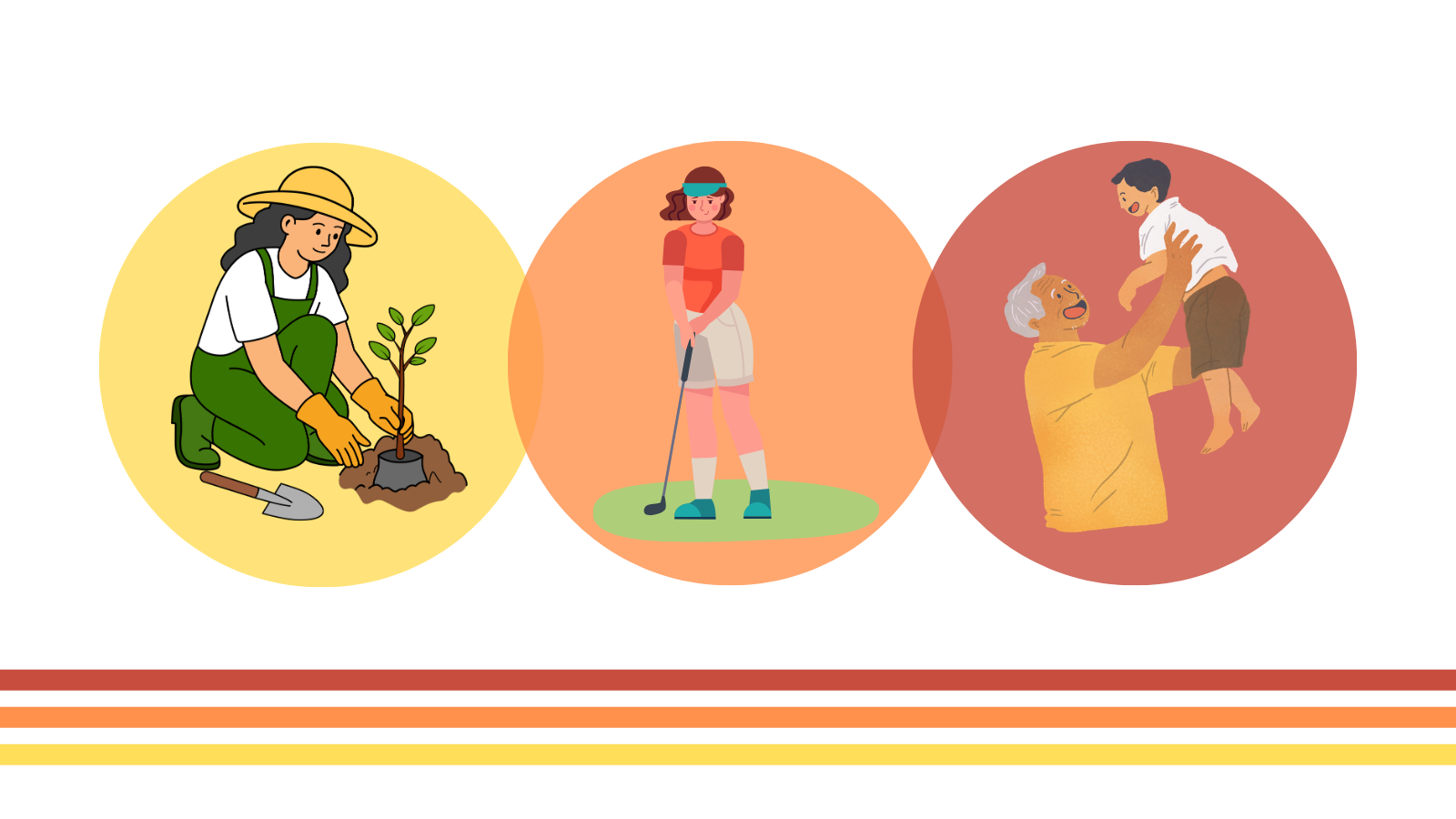
Strength matters far beyond the gym. It helps us garden, travel, play sport, carry the shopping and remain confident in everyday life. In this guide, we explore why maintaining functional strength becomes increasingly important as we age — and why the best reason to become stronger may simply be to keep doing the things you love.
In This Guide
What functional strength actually means
Why strength becomes increasingly important as we age
Gardening: strength hiding in plain sight
Travel: the physical capacity behind independence
Golf and recreational activity
Why confidence matters
Building strength for the life you want to live
The Bay City Health Takeaway
The Story Begins
Ask someone why they want to become stronger and they may initially talk about their back, their knees or perhaps improving their fitness.
But keep asking why, and eventually the real answer often appears.
“I want to keep playing golf.”
“I want to be able to work in my garden.”
“We’re travelling overseas next year.”
“I want to keep up with the grandchildren.”
“I don’t want to become someone who stops doing things because I’m worried about my body.”
These are the goals that matter.
Because for most of us, strength isn’t really about what happens inside a gym.
It’s about what strength allows us to do outside of it.
As we move through our 40s, 50s, 60s and beyond, maintaining physical capacity becomes increasingly important. Not because ageing automatically means becoming weak or incapable, but because muscle strength and physical function can gradually decline if we stop challenging them.
The encouraging part is that strength remains trainable.
And you don’t need to become a bodybuilder to benefit.
You simply need enough strength, balance, mobility and confidence to continue meeting the physical demands of your life.
That is functional strength.
And it may be one of the most valuable investments we can make in how we live as we get older.
What Does Functional Strength Actually Mean?
When people hear the words “strength training”, they often picture barbells, heavy weights and gyms.
Those things can certainly be part of strength training.
But strength itself is much broader.
Functional strength is your ability to produce and control force during the activities that matter in everyday life.
It is the strength required to:
get up from the ground after gardening
climb a flight of stairs
carry groceries from the car
lift a suitcase into the boot
walk confidently over uneven ground
swing a golf club repeatedly
pick up a child or grandchild
move furniture
carry bags through an airport
maintain balance when you stumble
get out of a low chair without relying heavily on your arms
These tasks may not look like exercise.
But physically, your body is still working.
Your legs produce force.
Your hips help control movement.
Your trunk transfers load.
Your shoulders and arms lift and carry.
Your balance system continually makes tiny adjustments.
Everyday life is full of physical challenges.
The stronger and more capable we are, the more comfortably we can meet them.
Why Strength Becomes More Important - Not Less
There is sometimes an assumption that we should naturally do less as we get older.
Exercise becomes gentler.
Weights become lighter.
Activities slowly disappear.
But this can create a problem.
If we continually ask less of the body, the body has less reason to maintain its capacity.
Muscle mass and strength naturally change across adulthood, particularly as we move into later decades of life. Periods of inactivity, illness, injury and reduced exercise can accelerate that decline.
For women, the years around and following menopause can also bring important changes in muscle and bone health.
This doesn’t mean decline is inevitable.
It means maintaining strength deserves our attention.
International physical activity guidelines recommend adults include regular muscle-strengthening exercise, with additional emphasis on strength, balance and functional activity as we age.
The goal isn’t necessarily to lift enormous weights.
It is to provide enough challenge for the body to have a reason to adapt.
Because the activities we love rarely become physically easier.
The suitcase still weighs the same.
The garden bed is still close to the ground.
The golf course is still several kilometres long.
The stairs don’t become shorter.
The grandchild gets heavier.
Maintaining our capacity helps keep the gap between what life asks of us and what our body can comfortably do as large as possible.
Gardening: Strength Hiding in Plain Sight
Gardening is a perfect example of why functional strength matters.
Spend an afternoon in the garden and consider how many different physical tasks are involved.
Squatting.
Kneeling.
Reaching.
Pulling.
Digging.
Lifting.
Carrying.
Twisting.
Walking across uneven ground.
Getting down onto the ground - and getting back up again.
A bag of potting mix may weigh 20 kilograms.
A full watering can becomes surprisingly heavy.
Even pruning can require prolonged shoulder strength and grip endurance.
When someone tells us:
“My back gets sore whenever I garden,”
the solution isn’t always to stop gardening.
Sometimes the better question is:
How can we prepare your body for gardening?
Perhaps hip strength needs improving.
Maybe lifting technique could be more efficient.
Perhaps someone has lost confidence getting on and off the ground.
Maybe their back simply isn’t accustomed to several hours of bending and lifting after a relatively sedentary week.
Rather than removing the activity, we can often build greater capacity for it.
That distinction matters.
Because gardening isn’t merely physical activity for many people.
It’s relaxation.
Creativity.
Fresh air.
A connection to home.
Something they love.
The goal of healthcare and exercise should not automatically be to protect people from meaningful activity.
Where appropriate, it should help them become capable enough to keep doing it.
Travel Requires More Strength Than We Realise
Think about the physical demands of travelling.
Carrying luggage.
Walking through airports.
Getting bags into overhead lockers.
Climbing stairs at train stations.
Walking kilometres around unfamiliar cities.
Getting on and off buses.
Navigating cobblestones.
Standing in queues.
Sleeping in different beds.
Then doing it all again the following day.
We often think of travel as leisure.
Physically, it can be quite demanding.
And this is where strength creates something incredibly valuable:
freedom.
The freedom to choose the walking tour.
The freedom to explore rather than remain at the hotel.
The freedom to carry your own bag.
The freedom to say yes to the stairs, the hike or the extra day of sightseeing.
For someone planning a significant trip, preparing the body can be just as worthwhile as preparing the itinerary.
Walking capacity matters.
But so do leg strength, balance, trunk strength and the ability to tolerate repeated physical activity.
Training for travel might sound unusual.
In reality, it makes perfect sense.
We train for marathons.
We train for sporting events.
Why wouldn’t we prepare physically for three weeks walking around Europe?
Golf: Strength, Rotation and Staying in the Game
Golf is another activity people often want to continue well into later life.
And although it may appear relatively gentle, a round of golf asks a lot from the body.
Walking.
Rotation.
Balance.
Repeated swinging.
Bending to retrieve the ball.
Carrying or pushing equipment.
Producing force through the legs, hips and trunk.
For many golfers, maintaining strength and mobility isn’t about becoming an elite athlete.
It’s about continuing to enjoy 18 holes without feeling that their back, hips or knees are limiting the experience.
This is where exercise becomes highly individual.
Someone who plays golf doesn’t necessarily need the same program as someone whose passion is gardening.
A golfer may benefit from rotational capacity, hip strength, trunk control and balance.
A gardener may require greater lifting capacity, squatting tolerance and confidence moving between standing and the ground.
A traveller may need walking endurance, calf strength and the ability to repeatedly climb stairs.
The best exercise program isn’t simply a collection of “good exercises”.
It should increasingly prepare you for your life.
Strength Builds More Than Muscle
There is another benefit to becoming physically stronger that can be harder to measure.
Confidence.
We regularly meet people who are capable of more than they realise.
But after an episode of pain, an injury or simply several years of doing less, confidence can gradually disappear.
People begin hesitating.
“Should I lift that?”
“Will bending hurt my back?”
“Maybe I shouldn’t walk that far.”
“I don’t think my knees could handle that.”
Over time, life can become smaller.
Not necessarily because the body is incapable, but because someone no longer trusts it.
Appropriate, progressive exercise can help rebuild that trust.
You lift something you previously avoided.
Nothing bad happens.
You become stronger.
You progress it.
You realise your body can adapt.
Eventually the conversation changes.
Instead of asking:
“Am I allowed to do this?”
you begin thinking:
“I know I can do this.”
That shift is powerful.
You Don’t Have to Wait Until Something Hurts
One of the biggest changes we would love to see in healthcare is a move away from waiting for something to go wrong before we invest in our physical capacity.
We service our cars before they break down.
We plan financially for retirement years before retirement arrives.
We invest in our homes to keep them functioning well.
Our bodies deserve the same long-term thinking.
You don’t need back pain to strengthen your back.
You don’t need knee pain to strengthen your legs.
You don’t need to experience a fall before working on balance.
And you don’t need to wait until everyday activities become difficult before beginning strength training.
Preventative exercise isn’t about being frightened of ageing.
Quite the opposite.
It’s about preparing for it confidently.
Building Strength for the Life You Want
At Bay City Health, one of the questions we increasingly ask is:
What do you want your body to still be able to do in ten or twenty years?
The answer will be different for everyone.
Perhaps you want to travel extensively in retirement.
Perhaps you want to keep playing golf.
Perhaps your garden is your happy place.
Perhaps you want to hike.
Perhaps you want to run.
Perhaps you simply want to remain independent, active and able to enjoy time with your family.
Once we understand the destination, exercise becomes much more meaningful.
Clinical Pilates, progressive strength training, walking, cardiovascular exercise and recreational activity can all form part of the picture.
The exact combination will depend on the person.
At Bay City Health, our Clinical Pilates approach increasingly combines movement quality with progressive strength development.
We want people to move well.
But we also want them to become capable.
That may involve Pilates equipment, bodyweight exercises, balance challenges or progressive resistance using strength equipment.
The method matters.
But the reason behind it matters more.
We aren’t strengthening a hip simply because a hip “should be strong”.
We’re strengthening it because stronger hips might help someone climb hills while travelling.
We aren’t training someone’s legs just to improve a number on a strength test.
We’re helping them remain confident getting out of a chair, walking up stairs and getting off the ground.
Exercise becomes much more powerful when it connects to something meaningful.
You Don’t Need to Train Like an Athlete
One final point is important.
Training for strength doesn’t mean exercise needs to become intimidating.
You don’t have to join a hardcore gym.
You don’t have to train until you’re exhausted.
And you certainly don’t have to compare yourself with the person beside you.
Strength training should meet you where you are.
For someone returning to exercise after years away, the starting point may be very simple.
For someone who has trained consistently for decades, it may need to be considerably more challenging.
What matters is appropriate progression.
Your body needs enough challenge to adapt, while the program remains suitable for your health, experience, goals and physical capacity.
Over time, what once felt difficult becomes easier.
Then we progress again.
That’s how capacity grows.
The Bay City Health Takeaway
We often talk about exercise in terms of muscles, joints, bones and cardiovascular health.
All of those things matter.
But sometimes we forget what they’re ultimately protecting.
Your life.
Strength is carrying your suitcase through the airport.
It’s spending Sunday afternoon in the garden.
It’s walking the golf course.
It’s picking up your grandchild.
It’s climbing the stairs to the beautiful restaurant you found on holiday.
It’s getting down onto the floor - and knowing you can comfortably get back up.
It’s saying yes without first wondering whether your body will cope.
The goal isn’t to spend your life training.
The goal is to build a body that allows you to spend more of your life living.
So perhaps the most useful question isn’t:
“How strong should I be?”
It might simply be:
“What do I want to keep doing?”
Then we build from there.
References:
World Health Organization. WHO Guidelines on Physical Activity and Sedentary Behaviour. Geneva: World Health Organization; 2020.
Australian Government Department of Health and Aged Care. Physical activity and exercise guidelines for all Australians.
Fragala MS, Cadore EL, Dorgo S, et al. Resistance training for older adults: Position statement from the National Strength and Conditioning Association. Journal of Strength and Conditioning Research. 2019;33(8):2019–2052.
Dent E, Morley JE, Cruz-Jentoft AJ, et al. Physical frailty: ICFSR international clinical practice guidelines for identification and management. Journal of Nutrition, Health & Aging. 2019;23:771–787.
Key Takeaways
Strength isn’t just for the gym - it supports almost everything we do in everyday life.
Gardening, travelling, golf and playing with family all require physical capacity.
Maintaining muscle strength becomes increasingly important as we move through adulthood.
Progressive exercise can build both physical capacity and confidence in your body.
Exercise is most meaningful when it prepares you for activities that matter to you.
The goal isn’t simply to become stronger - it’s to remain capable of doing what you love.
Related Reading
Clinical Pilates vs Reformer Pilates: What’s the Difference?
https://www.baycityhealth.com.au/blog/clinical-pilates-vs-reformer-pilates-whats-the-differenceWhy Successful People Invest in Their Health Before They Need To
https://www.baycityhealth.com.au/blog/why-successful-people-invest-in-their-health-before-they-need-toUnderstanding Your Body: Why Do I Wake Up Stiff Every Morning?
https://www.baycityhealth.com.au/blog/understanding-your-body-why-do-i-wake-up-stiff-every-morning